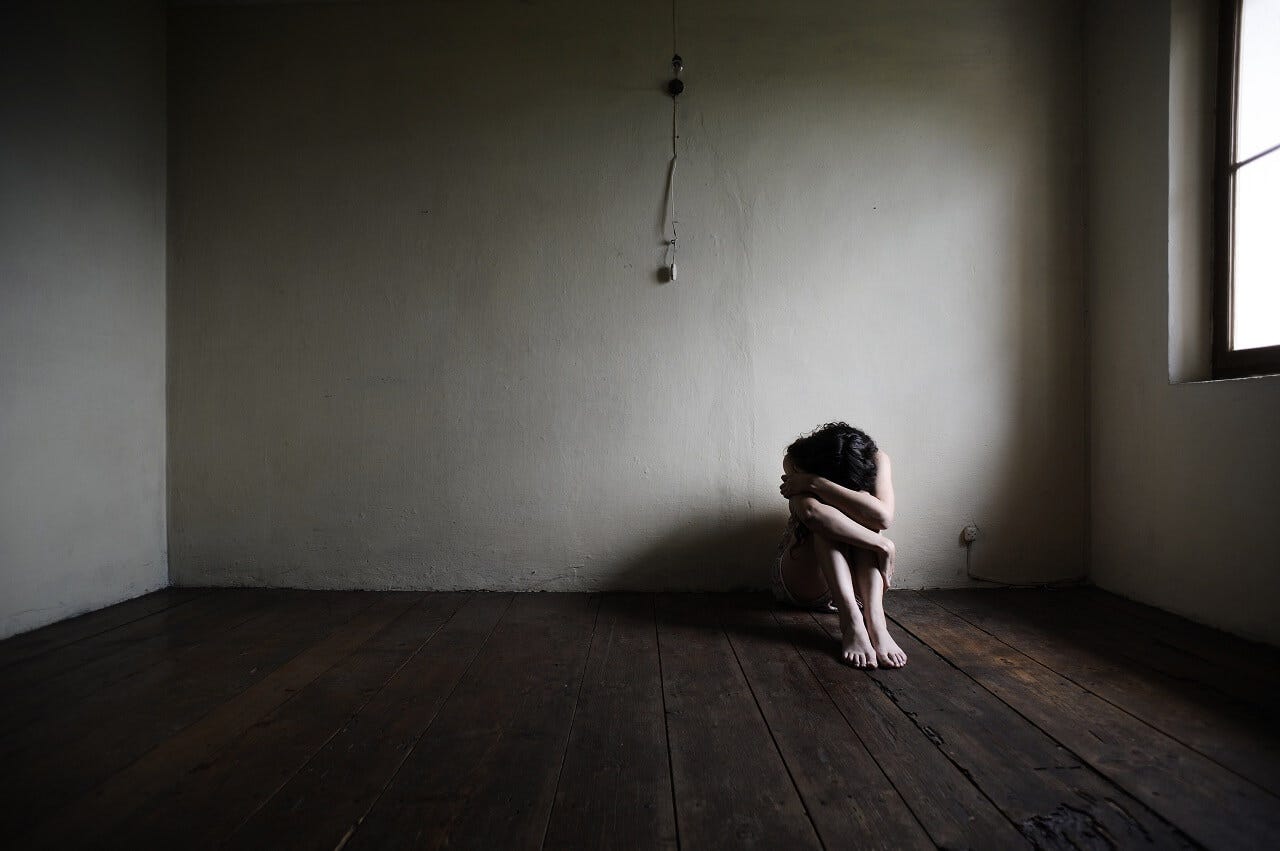
Fear of being alone is one of the deepest and most misunderstood emotional struggles people carry.Many people think it is just about loneliness. They think it means someone simply needs more friends more social plans more attention or a relationship. But in my work I see that the fear of being alone is often much deeper than that. It is not only about physical solitude. It is about emotional separation. It is about what happens when at some point in life a person becomes disconnected from themselves from others and from the world around them.This fear can shape relationships self-worth decisions habits attachment patterns and even physical and emotional health. It can make someone cling to the wrong people people-please stay in painful relationships suppress their real self or isolate entirely. And very often it starts much earlier than most people realize.The good news is this: if you struggle with the fear of being alone there is nothing wrong with you. This fear usually began as a survival strategy. And what was once a survival strategy can absolutely be healed.http://youtube.com/watch?v=z4QK8TaiyKc&feature=youtu.beWhy the fear of being alone is so primalThe fear of being alone is one of our most primal fears because as human beings we are wired for connection.A baby cannot survive alone. A child depends on connection with caregivers for safety food protection warmth and emotional regulation. At a nervous system level being alone does not feel neutral. It can feel dangerous. It can feel like abandonment. It can feel like “If I am left alone I may not survive.” That programming is ancient automatic and deeply embedded in the body and mind.As children we do not have the ability to logically analyze everything that happens around us. We adapt. We interpret. We form beliefs. We make emotional decisions about who we need to be in order to stay connected accepted and safe.That is where the deeper roots of the fear of being alone often begin.How childhood shapes the fear of lonelinessMany people who struggle with loneliness or fear of abandonment learned very early that being themselves did not feel safe enough.Sometimes this comes from obvious neglect rejection criticism favoritism emotional inconsistency or punishment. Sometimes it comes from more subtle messages. A child may be loved but still feel they have to be a certain way in order to be accepted. They may learn that they need to be quiet easy perfect helpful strong smart successful or emotionally low-maintenance in order to receive love and approval.That is a huge sacrifice for a child.The child begins to form unconscious beliefs such as:I need to be perfect so I won’t be rejected.I need to please others so I won’t be left.I need to hide my needs so I won’t be too much.I need to be strong so no one sees my vulnerability.I need to become someone else so I don’t end up alone.This is where self-abandonment begins.The link between fear of being alone and self-abandonmentOne of the most powerful insights behind the fear of being alone is this: many people are not only afraid of being abandoned by others. They are living with the pain of having abandoned themselves.When a child learns that who they naturally are is not fully welcomed they start to disconnect from parts of themselves. They reject their real feelings needs softness truth voice sensitivity or uniqueness. They adapt to survive. They play roles. They become who they think they need to be.Then later in life something feels off.A person may have relationships family social contact even success - and still feel alone. They may say “Something is missing” or “I don’t know why but I still feel empty.”That emptiness often comes from the earlier separation from self.If you had to leave yourself behind in order to belong then even when other people are around a part of you still feels disconnected. The loneliness is not always caused by the absence of people. It is often caused by the absence of self-connection.Common signs the fear of being alone is trauma-basedFear of being alone can show up in many different ways. It does not always look like obvious loneliness.Sometimes it looks like:people pleasingperfectionismclinginessemotional dependencyfear of rejectionfear of abandonmentstaying in unhealthy relationshipsneeding constant reassurancebeing unable to enjoy your own companyanxiety when alone at nightdifficulty sleeping aloneisolating yourself even when you want connectionavoiding vulnerabilitypushing people away before they can hurt youfeeling empty even when surrounded by peopleIn some people the fear creates a strong need to stay attached. In others it creates the opposite pattern: isolation. A person may decide unconsciously that it is safer not to need anyone at all. They may become guarded distant and overly self-reliant. But underneath that pattern there is often the same wound: connection feels painful risky or unsafe.This is why two people can have the same root wound and show up in very different ways.Why some people cling and others isolateWhen someone fears being alone they may respond in one of two broad patterns.The first is attachment through over-connection. This can look like neediness people pleasing staying overly available tolerating poor treatment or doing anything to avoid being abandoned. A person may lose themselves in relationships constantly seek approval or feel intense anxiety if someone pulls away.The second is protection through disconnection. This can look like emotional withdrawal avoiding intimacy choosing isolation saying “I don’t need anyone” or convincing oneself that being alone is better. The person may appear independent but inside they often feel emptiness sadness or disconnection.Both patterns are protection.Both are trying to solve the same pain.Both are shaped by the same question: “How do I avoid being hurt rejected or abandoned again?”Conditional love and the fear of receivingAnother hidden layer behind fear of being alone can be the experience of conditional giving and receiving in childhood.Some children grow up in environments where support praise affection or care always seem to come with a price. Love may feel conditional. Help may feel manipulative. Kindness may be followed by expectation guilt pressure or control. In that kind of environment a child can unconsciously decide that receiving is dangerous.They may believe:If someone gives me something I owe them.If I receive support it will cost me.If I let people in they will control me.It is safer not to need.It is safer not to receive.This can lead to a very painful adult pattern where someone wants connection but resists support. They long for closeness but do not trust it. They want love but fear the emotional debt they imagine it will create.That fear keeps people lonely even when love is available.Fear of being alone can drive unhealthy coping habitsThe fear of loneliness can also lead people into behaviors that temporarily create belonging even if those behaviors are harmful.For example teenagers may start drinking smoking or acting against their own values simply to feel accepted. Adults may stay in toxic friendships unhealthy romantic relationships or emotionally draining family dynamics because being mistreated feels less painful than being alone. Others may overwork overgive or become addicted to being needed because it creates a temporary sense of connection and worth.These are not random choices. They are often attempts to avoid the unbearable pain of disconnection.When the nervous system believes that isolation means danger people will often do almost anything to avoid it.The role of family dynamics and sibling experiencesNot everyone in the same family experiences belonging in the same way.One sibling may feel seen valued and emotionally secure while another may feel overlooked excluded criticized or different. Favoritism comparison emotional mismatch and family roles can all shape whether a child grows up feeling connected or alone. One child may internalize the belief “There is something wrong with me” and carry that feeling of emotional loneliness throughout life.This is why fear of being alone is not only about whether a person had people around them. It is about how safe accepted and emotionally connected they felt inside those relationships.Why feeling alone is often an illusion of separationOne of the most healing perspectives is recognizing that feeling alone and being alone are not always the same thing.Many people feel lonely in a room full of others. Many feel unseen in relationships. Many feel emotionally disconnected even when surrounded by family friends or coworkers.That is because loneliness is often rooted in separation.Separation from self.Separation from others.Separation from trust.Separation from life.Separation from the deeper truth that we are built for connection.When someone believes “I am different” “I do not belong” “People cannot be trusted” or “No one will understand me” they create emotional distance even when opportunities for connection exist.And once separation becomes familiar loneliness can start to feel normal.Healing begins by seeing your patternsIf you want to heal the fear of being alone one of the most powerful places to begin is with awareness.Ask yourself:How do I push connection away?How do I make loneliness familiar?What roles do I play so I do not feel abandoned?What unhealthy strategies do I use so I do not feel alone?Where did I first learn that being myself was not enough?These questions matter because many people say they want connection but their protective patterns keep blocking it.You may want close friendships but avoid vulnerability.You may want love but choose emotionally unavailable people.You may want support but reject help.You may want deeper connection but lead with judgment fear or defensiveness.This is not because you are broken. It is because the mind and body are repeating old protective patterns.How to overcome the fear of being aloneHealing the fear of being alone is not about forcing yourself to be social or pretending you do not care. It is not about numbing suppressing distracting or staying busy enough to avoid your feelings. It is about returning to yourself.Here are some deeper healing directions:1. Recognize that your fear makes senseYour fear did not come from nowhere. It was shaped by experiences nervous system learning and emotional survival. Compassion is essential. Shame will not heal this wound.2. Identify where you abandoned yourselfNotice what parts of yourself you rejected to be accepted. Your truth? Your sensitivity? Your needs? Your anger? Your softness? Your individuality?Healing starts when you stop abandoning yourself in the same ways others once did.3. Challenge the old beliefsMany adults still live by childhood beliefs such as:I am not safe on my own.I am not strong enough.I need people to validate me.I cannot trust anyone.I do not belong.I am too different.These beliefs may feel true but they are often outdated programming.4. Build safe connection graduallyConnection is a skill. It can be rebuilt. That may mean reconnecting with old friends having honest conversations joining new spaces practicing openness or letting yourself receive support in small ways.5. Strengthen your relationship with yourselfThe safest place is not perfection. The safest place is self-connection. The more deeply you know yourself accept yourself and stay with yourself the less desperate and fearful your relationships become.6. Upgrade the mindset that was created in childhoodYou have more freedom more resources more awareness and more choices now than you did as a child. The mind can change. Patterns can change. Emotional reactions can change. Healing is possible.Feeling lost disconnected or lonely does not mean something is wrong with youMany people feel ashamed of their loneliness. They think it means they are weak needy broken or too damaged.It does not.It usually means there is an old wound asking for attention.It means there is an unresolved pattern asking to be seen.It means there is a part of you that learned survival through adaptation and is now ready for healing.The purpose of healing is not to become someone else. It is to come back to who you are. That is one of the most powerful truths in emotional healing. Life often becomes a process of returning - returning to your truth your self-worth your authenticity your capacity to connect and your ability to feel safe being fully yourself.You are not as alone as your fear tells youFear creates distortion.It tells people they are cut off rejected separate different unseen and unsupported. But very often help warmth kindness and connection are much closer than the fear allows them to see.Sometimes support comes from family.Sometimes it comes from a friend.Sometimes it comes from a stranger.Sometimes it comes from a therapist coach mentor or healer.Sometimes it begins inside with the moment you stop rejecting yourself.When you heal the fear of being alone you do not just become better at relationships. You become more whole. You become more available for life. You become more able to trust receive and connect without betraying yourself.And that changes everything.Final thoughts on healing the fear of being aloneIf you are struggling with the fear of being alone please know this:You are not weak.You are not needy.You are not broken.And you are not alone.This fear is often rooted in very old emotional programming - in childhood experiences of rejection criticism conditional love self-abandonment and disconnection. But those patterns do not have to define your future.Healing begins when you stop asking “What is wrong with me?” and start asking “What happened to me?” and “How can I come back home to myself?”That is where real healing starts.Not in pretending.Not in suppressing.Not in distracting yourself.But in doing the deeper work of reconnecting with yourself changing the old patterns in your mind and allowing yourself to experience safe connection again.Because the truth is we are wired for connection.And the more connected you become to yourself the less alone you feel in this world.