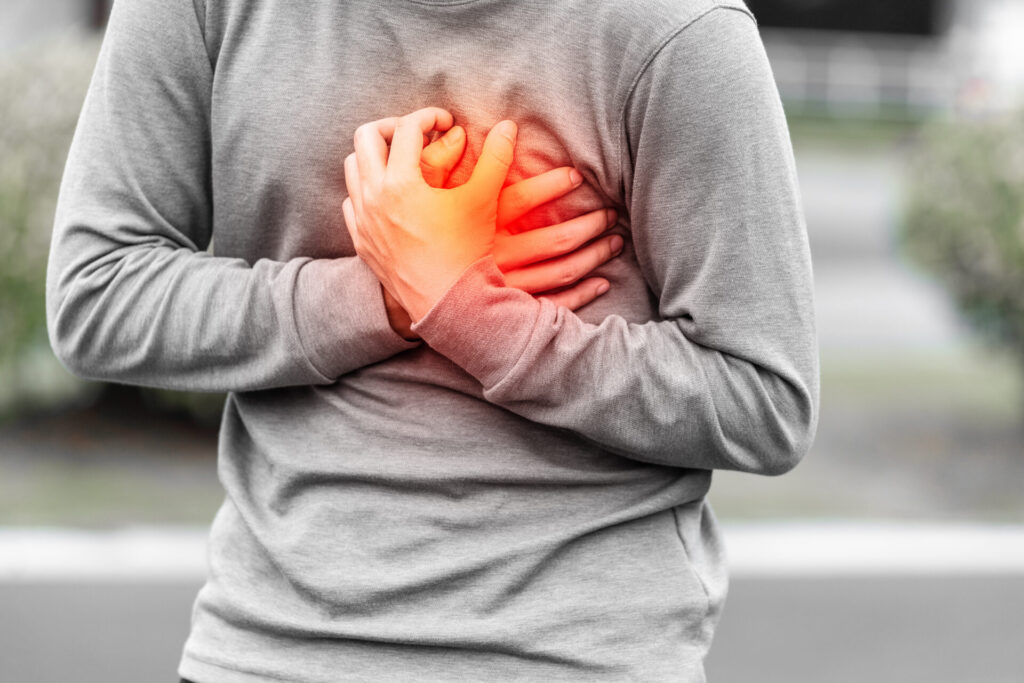
Cardiophobia is an intense fear that normal or anxiety-related heart sensations – such as a racing heartbeat, palpitations, or chest tightness – mean that something is dangerously wrong with your heart. The fear can create more adrenaline, stronger sensations, and an exhausting cycle of monitoring and panic.
If you live with cardiophobia, you may feel as though your heart has become the centre of your entire life. You check your pulse, notice every skipped beat, avoid exercise, search symptoms online, or repeatedly seek reassurance. Even after a doctor says your heart is healthy – or that a known condition is being properly managed – the relief may last only a few hours or days.
Then you feel another sensation, and the fear returns.
This does not mean that the symptoms are “all in your head.” The sensations are real. What may be changing is the meaning your mind gives them. A faster heartbeat can be interpreted as danger; that interpretation activates the stress response; and the stress response makes the heart beat even faster. Your body then seems to confirm the very thing you fear.
In my video, Cardiophobia: Why Your Heart Feels Like a Threat, I explain how this cycle can be connected not only to fear of illness, but also to deeper beliefs about vulnerability, usefulness, love, and trust in the body. Let’s explore the questions people with cardiophobia ask most often.
Important: New, severe, or unexplained heart-related symptoms should always be medically assessed. Chest pressure or pain—especially with shortness of breath, sweating, nausea, light-headedness, or discomfort in the arm, back, neck, jaw, or stomach—can require urgent medical care. If you think you may be having a heart attack, call 911. Anxiety should never be self-diagnosed as the cause of a new symptom.
What is cardiophobia?
Cardiophobia is a persistent and disproportionate fear of having a heart problem, heart attack, or sudden cardiac event, often accompanied by repeated monitoring, reassurance-seeking, avoidance, and anxiety about bodily sensations.
The Cleveland Clinic describes cardiophobia as a form of anxiety involving an intense fear of heart problems, particularly a heart attack. A person may interpret palpitations, chest discomfort, breathlessness, or a change in heart rate as proof of immediate danger—even when medical assessment has not found an emergency.
The experience can be deeply convincing because the heart responds naturally to fear. When your brain detects a threat, it releases stress hormones that prepare you to fight or run. Your heart may beat faster or harder. If the heartbeat itself is what you fear, your body’s protective response becomes the next “threat.”
What does cardiophobia feel like?
Cardiophobia can feel like being trapped in constant surveillance of your own body, where every heartbeat, flutter, or change in pulse seems capable of becoming a catastrophe.
You may recognize experiences such as:
- Checking your pulse, smartwatch, blood pressure, or oxygen level repeatedly
- Feeling frightened when your heart rate rises during exercise, sex, excitement, or stress
- Avoiding caffeine, activity, travel, being alone, or places far from a hospital
- Searching symptoms online and becoming more frightened by what you find
- Asking doctors, family members, or a partner for repeated reassurance
- Feeling briefly relieved after a normal test, then doubting the result
- Becoming especially anxious at night, when the house is quiet and your attention turns inward
Many people tell me they feel better while working, travelling, spending time with friends, or focusing on a meaningful project. The sensations become louder when they are alone with their thoughts. This does not make the experience imaginary. It shows how strongly attention can amplify bodily awareness.
Why does anxiety make my heart race?
Anxiety activates the body’s fight-or-flight system, which can increase heart rate, breathing, muscle tension, and alertness so that you are prepared to respond to perceived danger.
Imagine that you feel one unusual beat. Your mind says, “What if my heart is failing?” Your body releases adrenaline. Your heart beats faster. You notice the change and think, “This proves something is wrong.” More fear produces more physical activation.
This is the cardiophobia loop:
- You notice a sensation.
- You interpret it as dangerous.
- Fear activates your nervous system.
- The sensation becomes stronger.
- The stronger sensation appears to confirm the danger.
The goal is not to shame yourself for reacting. Your mind is trying to protect you. Healing begins when you teach it that a sensation can be noticed, evaluated appropriately, and tolerated without immediately becoming a prediction of death.
Why did I develop a fear of my heart?
Cardiophobia may develop after a frightening health event, the sudden cardiac death of someone you love, repeated medical experiences, panic attacks, family anxiety about health, or years of learning that your body is fragile.
For one person, the fear begins after witnessing a parent have a heart attack. For another, it starts with a first panic attack that felt completely unexpected. Someone born with a heart condition may have grown up hearing worried adults describe them as delicate, weak, or different—even after treatment allowed them to live normally.
Overprotective parenting often comes from love, but a child can absorb a different message: “My body cannot be trusted. The world is dangerous for me. I am not as strong as everyone else.” Later in life, a normal increase in heart rate may awaken that old story.
Lifestyle guilt can become another trigger. If you have criticized yourself for your diet, weight, stress, or lack of exercise, you may begin treating every sensation as punishment for having made “bad” choices. Responsible healthcare matters, but shame rarely creates a calm and sustainable relationship with the body.
Is cardiophobia always caused by a hidden emotional root?
No single emotional explanation fits everyone, but personal history and subconscious beliefs can influence why heart sensations feel uniquely dangerous to a particular person.
I do not believe in forcing every client into the same story. Your root may involve loss, medical trauma, a frightening panic attack, fear of being alone, distrust of healthcare, or something entirely different. Some people benefit most from practical anxiety treatment; others discover that the symptom is connected to a deeper belief about safety or worth.
The useful question is not, “What dramatic trauma must I uncover?” It is: “What did my mind learn about my heart, my body, vulnerability, and what would happen if I needed help?”
Understanding is not about blaming your parents, your past, or yourself. It is about identifying the rule your nervous system is still following so that you can update it.
Why am I terrified of being sick or becoming a burden?
For some people, fear of a heart problem is intensified by the belief that they must remain strong, healthy, and useful in order to deserve love and belonging.
Beneath “What if something happens to my heart?” there may be another fear: “What if I cannot take care of my children? What if my family suffers? What if I need help? What if people leave because I become a burden?”
This can happen when love was experienced as conditional. Perhaps you were praised for being responsible, quiet, productive, or emotionally strong. You learned to care for everyone else while having very little compassion for your own needs. Illness then represents more than physical discomfort – it represents helplessness, rejection, and loss of identity.
A powerful reframe is: My worth does not disappear when I need support. I am lovable when I am strong, and I am lovable when I am vulnerable.
This belief must become more than an affirmation. It can be practised by resting without earning it, asking for help, receiving care without apologizing, setting boundaries, and allowing other adults to manage their own emotions.
Why do I keep checking my pulse and searching for reassurance?
Checking and reassurance reduce fear briefly, but they can teach the brain that the sensation was dangerous and that you survived only because you checked.
This is why a normal ECG, a reassuring appointment, or a “safe” number on a smartwatch may not settle cardiophobia for long. The anxious mind quickly asks a new question: “What if they missed something? What if the problem started after the test? What if this reading is different?”
You do not need to ignore medical advice or stop medically necessary monitoring. The distinction is between monitoring recommended by your healthcare provider and compulsive checking used solely to neutralize anxiety. A doctor or qualified therapist can help you create a safe plan for reducing the second pattern without neglecting your health.
Can exposure therapy help cardiophobia?
Yes. A specialized form called interoceptive exposure may help people become less frightened of bodily sensations, but it should be appropriate for the individual and medically cleared when heart concerns are present.
Cardiophobia can seem different from a fear of flying or dogs because you cannot walk away from your own heartbeat. However, exposure does not always mean confronting an external object. Interoceptive exposure involves safely and deliberately experiencing sensations associated with anxiety so the brain can learn that they are tolerable and do not automatically signal catastrophe.
The Beck Institute explains interoceptive exposure as a way to test feared expectations and reduce sensitivity to bodily sensations. It is often used within cognitive behavioural therapy. This work should not be improvised from an online checklist if you have a diagnosed condition, unexplained symptoms, or uncertainty about what activity is medically safe.
Root-cause work and exposure do not have to compete. One may help you understand why the fear carries so much emotional meaning; the other may help your nervous system learn through direct experience that a changing heartbeat can be safe.
Can hypnotherapy help with cardiophobia?
Yes. Hypnotherapy can help people reduce cardiophobia by exploring the personal meaning attached to heart sensations and rehearsing calmer beliefs about safety, vulnerability, and trust in the body.
In hypnosis, we can explore when the mind first learned that the heart was fragile or that being unwell would lead to rejection, helplessness, or loss. We can then begin reframing beliefs such as:
- “My body will fail me.”
- “I must monitor my heart to stay alive.”
- “I am loved only when I am useful.”
- “If I become vulnerable, I will be alone.”
- “A strong sensation always means danger.”
The intention is not to convince you that every symptom is harmless or replace medical care. It is to stop treating fear as a diagnostic instrument. Hypnotherapy can be one part of a broader plan that includes medical evaluation, psychotherapy, appropriate exposure work, lifestyle support, and prescribed treatment.
You can learn more about my approach to hypnotherapy for fears and my work with white coat syndrome and blood pressure anxiety.
How can I calm cardiophobia in the moment?
Start by naming the fear response, reducing compulsive checking, grounding your attention outside your body, and following the medical plan you created when you were calm.
Try this gentle sequence:
- Name what is happening. “I am noticing a heart sensation, and my alarm system is interpreting it as danger.”
- Avoid arguing with the fear. Trying to guarantee that nothing could possibly be wrong often fuels another round of doubt.
- Lengthen the exhale gently. Do not force a huge breath. Let your breathing become quieter and slower.
- Reconnect with the room. Notice colours, sounds, textures, and the feeling of your feet on the floor.
- Delay non-medical checking. If checking is not part of your healthcare plan, give the urge time to rise and fall.
- Return to life. Choose one small outward action: make tea, fold laundry, call a friend, step into the garden, or continue a familiar task.
If a symptom meets the emergency guidance provided by your healthcare professionals – or you are genuinely unsure – seek medical help. The American Heart Association’s warning-sign guide explains when immediate action may be needed.
Can cardiophobia actually go away?
Cardiophobia can improve significantly when you address both the fear cycle and the beliefs or experiences that taught your nervous system to see the heart as a constant threat.
Recovery does not mean never noticing your heartbeat again. It means a faster heartbeat no longer steals the entire day. It means you can exercise within your medical guidance, attend an appointment without days of dread, and hear a health story without automatically imagining it happening to you.
Most importantly, your focus begins moving from “How do I make absolutely certain I will never die?” to “How do I want to live today?” No person can obtain a guarantee about tomorrow. Cardiophobia promises control through vigilance, but it often takes away the life you are trying so hard to protect.
Rebuilding trust can include learning to care for your body without obsessing over it, allowing yourself to receive support, and appreciating what your body does for you each day. Your heart does not have to be your enemy. It can become part of a body you listen to responsibly, treat compassionately, and allow to carry you into a fuller life.
When should I seek professional help?
Seek help when fear, checking, avoidance, or reassurance-seeking interferes with exercise, sleep, work, relationships, medical appointments, or your ability to enjoy daily life.
Begin with appropriate medical assessment, particularly when symptoms are new or changing. Once urgent or underlying medical concerns have been addressed, a qualified mental health professional can help you work with the remaining fear. Depending on your needs, support may include CBT, interoceptive exposure, treatment for panic or health anxiety, hypnotherapy, or a coordinated combination.
If you would like to explore the subconscious beliefs behind your cardiophobia, you can book a consultation with me. I work with clients in Calgary and online, helping them understand the fear beneath the symptom and rebuild a more trusting relationship with their mind and body.
You can also watch the complete YouTube discussion: Cardiophobia: Why Your Heart Feels Like a Threat.
Final thought
Cardiophobia is not evidence that you are weak; it is evidence that your protective system has become intensely focused on one of the body’s most meaningful sensations.
Your mind has been trying to keep you alive. Now it may need to learn a new way of protecting you – one based on informed care, emotional safety, self-compassion, and presence rather than constant surveillance.
You deserve to care about your heart without living in fear of it. You deserve to be loved when you are capable and when you need care. And you deserve to spend more of your life living – not waiting for your body to prove that it is safe.